Optimizing a Turtle 40 OZ Tumbler STL File for Custom 3D Printing and Personalization
The Intersection of Functional Design and Marine Aesthetics
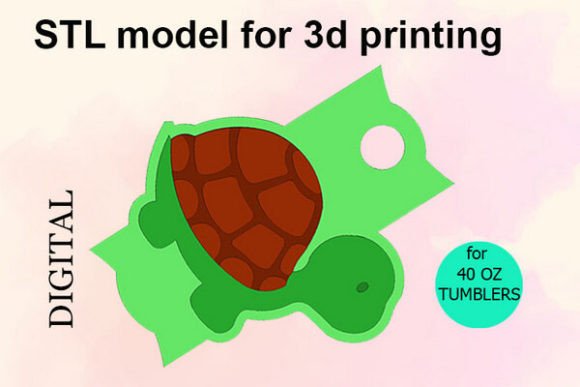
The modern beverage accessory market has shifted significantly toward personalization, with the 40 oz tumbler emerging as a ubiquitous vessel for hydration. Within this ecosystem, digital fabrication offers a unique pathway to customization that mass manufacturing cannot replicate. A specifically designed Turtle 40 OZ Tumbler STL file represents more than a simple decorative element; it serves as a functional interface between user and product. This digital asset allows hobbyists, professionals, and creators to manufacture a straw topper that combines ergonomic utility with thematic resonance.
The choice of a sea turtle motif is not merely aesthetic. In product design, biomimicry and nature-inspired forms often create stronger emotional connections with users. The organic curves of a turtle shell translate exceptionally well to Fused Deposition Modeling (FDM) printing, allowing for smooth layer transitions and structural integrity. When utilizing this specific STL file, the designer has accounted for the volumetric constraints of standard 40 oz tumblers, ensuring that the visual weight of the topper balances correctly against the large capacity of the cup. This balance is critical; an ill-proportioned topper can make the tumbler feel top-heavy or visually disjointed. By integrating marine life themes into daily routines, users transform a utilitarian object into a conversation piece that evokes coastal environments and tropical mindfulness.
Technical Considerations for Slicing and Fabrication
Achieving a high-quality print from a digital download requires understanding the relationship between the geometry of the Turtle 40 OZ Tumbler STL file and printer mechanics. While the file is optimized for immediate use, the final output quality depends heavily on slicer configuration. Because this accessory interacts directly with a drinking straw and potentially the user's mouth, material safety and surface finish are paramount.
- Layer Height and Resolution: For decorative items featuring organic shapes like a sea turtle, a layer height of 0.12mm to 0.16mm is generally recommended. This resolution captures the curvature of the shell and flippers without introducing excessive stair-stepping artifacts. Finer layers also reduce the need for post-processing sanding, which is vital for maintaining hygiene standards on drinkware accessories.
- Infill and Wall Count: Unlike structural mechanical parts, a straw topper does not require high infill density. A 15-20% gyroid or cubic infill provides sufficient internal support while minimizing print time and material usage. However, increasing wall perimeters to three or four shells is advisable. This enhances the watertightness of the print and creates a smoother outer surface that is easier to clean and sanitize.
- Support Structures: The geometry of a turtle topper often includes overhangs, particularly around the head and flipper areas. Tree supports or organic supports are preferable to standard linear supports for this application. They contact the model at fewer points, reducing scarring on the visible surfaces and making removal significantly easier. Proper orientation of the STL file on the build plate can sometimes eliminate the need for supports entirely, depending on the specific angle of the turtle’s anatomy.
- Tolerance Management: The fitment for a 40 oz tumbler straw varies slightly between manufacturers. When preparing this digital file, users should verify their specific straw diameter. If the fit is too tight, scaling the model by 1-2% in the slicer or adjusting the horizontal expansion setting can compensate for plastic shrinkage during cooling.
Material Selection and Post-Processing Versatility
One of the distinct advantages of acquiring a digital STL file rather than a pre-manufactured product is the autonomy over material choice. The design is suitable for printing with plastics of various colors, each offering different functional and aesthetic properties. Polylactic Acid (PLA) remains the most common choice due to its ease of printing, biodegradability, and vast color selection. Matte PLA variants are particularly effective for this turtle design, as they diffuse light and hide layer lines, mimicking the texture of natural skin or shell.
For users requiring greater durability or heat resistance, Polyethylene Terephthalate Glycol (PETG) is a viable alternative. PETG offers better UV resistance, which is beneficial for tumblers frequently used outdoors or left in vehicles. However, PETG can be prone to stringing, requiring careful retraction tuning to maintain the crisp details of the turtle motif. Food-safe certifications should always be verified when selecting filament for any item that contacts beverages, regardless of the base polymer type.
Beyond the raw print, this accessory is designed for manual decoration. The digital model provides a blank canvas for creative expression. Users can employ acrylic paints, alcohol inks, or epoxy resins to enhance the marine theme. A clear coat sealant is essential after painting to protect the artwork from moisture and wear. This post-processing capability transforms the Turtle 40 OZ Tumbler STL file from a static digital object into a customizable art project, appealing to educators using 3D printing for art integration, hobbyists refining their finishing skills, and entrepreneurs creating bespoke product lines.
Digital Asset Management and Commercial Flexibility
Understanding the logistics of digital product acquisition is crucial for both consumers and business owners. Upon purchase, this design is delivered as an instant download zipped file. This delivery method ensures data integrity and compatibility across different operating systems. For professionals and business owners, managing these assets involves establishing organized libraries. Naming conventions that include dimensions, version numbers, and intended use cases streamline workflow when retrieving files for future prints or client orders.
The availability of this STL file supports multiple operational models. Individual makers can print single units for personal use or gifts. Small business owners can leverage the file to produce limited-run collections, provided they adhere to the licensing terms associated with the digital purchase. The ability to print on demand eliminates inventory risk and storage costs associated with physical goods. Furthermore, for those without access to 3D printing hardware, the option to order a print service bridges the gap between digital ownership and physical possession. This hybrid model democratizes access to custom manufacturing, allowing researchers, educators, and consumers to participate in the maker economy regardless of their technical infrastructure.
Ergonomics and User Experience in Drinkware Accessories
While the visual appeal of the sea turtle motif drives initial interest, long-term satisfaction depends on ergonomic performance. A successful Turtle 40 OZ Tumbler STL file must address several tactile and functional requirements. The topper should not interfere with lip placement or drinking comfort. The profile of the turtle should be low enough to prevent accidental contact during sipping but substantial enough to serve as a grip aid when inserting or removing the straw.
Hygiene is another critical factor in user experience. Complex geometries can trap moisture and bacteria if not designed with cleaning in mind. High-quality STL files for drinkware accessories avoid deep crevices and internal cavities that cannot be accessed with standard cleaning tools. The turtle design typically utilizes solid, continuous surfaces that can be wiped down easily. Additionally, the psychological impact of the design contributes to the user experience. Research in environmental psychology suggests that exposure to nature imagery, even in stylized forms, can reduce stress and improve mood. Integrating this marine magic into a daily hydration routine leverages these benefits, turning a mundane habit into a momentary mental escape.
Applications Across Diverse User Groups
The versatility of this digital design extends beyond individual consumers. Educators can utilize the Turtle 40 OZ Tumbler STL file as a teaching tool in STEM curricula. Students can analyze the mesh topology, experiment with different slicing parameters to observe changes in strength and finish, or study the biology of sea turtles alongside the engineering of the replica. This cross-disciplinary approach reinforces learning through tangible creation.
Researchers and designers studying sustainable product lifecycles can examine how digital distribution reduces carbon footprints compared to traditional shipping. By transmitting only data and manufacturing locally, the environmental impact of logistics is minimized. For content creators and influencers, customized tumblers serve as branded merchandise that aligns with eco-conscious or ocean-themed narratives. The ability to modify colors and finishes allows for seasonal variations or campaign-specific branding without minimum order quantities.
Ultimately, the value of this STL file lies in its adaptability. It functions equally well as a precise engineering component, an artistic medium, an educational specimen, and a lifestyle accessory. Whether printed personally or sourced through a service, the transition from digital coordinates to physical object empowers users to tailor their environment to their specific aesthetic and functional needs. The sea turtle topper stands as a testament to the maturity of desktop manufacturing, where niche designs can achieve professional relevance and widespread utility through accessible digital formats.