Clay Cutter STL File Spade - Gardening: Integrating Digital Assets into Creative Workflows
The transition from concept to tangible product in polymer clay, cookie decorating, or jewelry making often hinges on the precision of your tools. For creators and small business owners, the Clay Cutter STL File Spade - Gardening represents more than just a seasonal motif; it is a functional digital asset designed to streamline production and expand creative inventory. This specific STL file bundle provides a comprehensive solution for makers who require versatility without the wait times associated with physical shipping. By utilizing a digital download, you integrate immediate access to professional-grade tooling directly into your fabrication workflow.
This spade-themed cutter set serves as a symbolic and practical element for gardening-related projects. Whether you are producing botanical earrings, fondant accents for spring cakes, or hair barrettes for a floral collection, the ability to print these tools on-demand allows for rapid prototyping and iteration. The design focuses on plant lovers and garden aesthetics, but its utility extends across multiple mediums including clay, dough, and soft pastes. Understanding how to leverage this digital file within your existing 3D printing and crafting ecosystem is essential for maximizing efficiency and maintaining consistent quality across your output.
Technical Specifications and Print Preparation
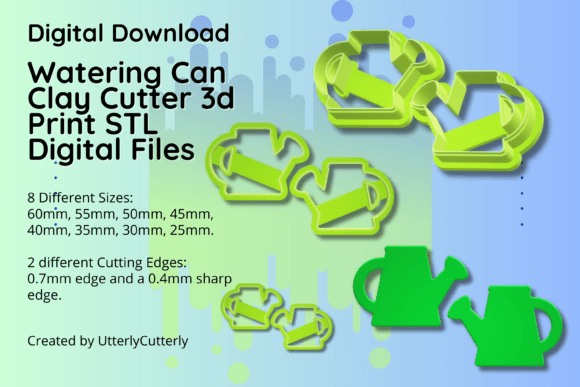
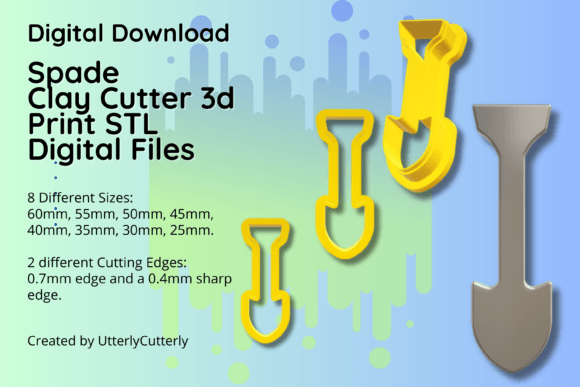
Successful implementation of any STL file begins with understanding the technical parameters before slicing. This bundle is engineered for ease of printing, yet achieving optimal results requires adherence to specific settings. The pack includes eight distinct sizes ranging from 25mm to 60mm, measured from the longest ends. This graduated sizing system allows you to curate custom combinations, ensuring you have the correct scale for everything from delicate stud earrings to large statement pendants or cookie decorations.
Crucially, this digital asset offers two distinct cutting edge profiles to accommodate different material viscosities and finishing requirements. Selecting the correct profile during the planning phase prevents material waste and post-processing time.
- Standard Edge: Features a 0.7mm wall thickness with a 3mm thick base and a total height of 12mm. This profile is robust and ideal for softer clays or doughs where structural integrity of the cutter itself is paramount during repeated use.
- Sharp Edge (SE): Abbreviated as SE in the file names, this variant includes a 1mm support wall tapering to a precise 0.4mm cutting edge. It shares the same 3mm base and 12mm height specifications. This geometry is optimized for polymer clay jewelry where clean, crisp edges reduce the need for extensive sanding or trimming after baking.
For projects requiring texture, note that any embossing lines are designed at 10.5mm tall. To ensure these details transfer correctly without bottoming out, you must prepare your clay or medium to be thicker than 1.5mm. This specification dictates your rolling process; using adjustable roller guides set to at least 2mm or 3mm ensures the embossing feature functions as intended rather than becoming a defect.
Workflow Integration: From Digital File to Physical Tool
Incorporating the Clay Cutter STL File Spade - Gardening into your routine involves a sequence of preparation, fabrication, and validation steps. Because this is a digital download, the lead time is eliminated, allowing you to respond instantly to market trends or client requests. However, this immediacy shifts the quality control responsibility to your local printing environment.
Slicing and Material Selection
When preparing the file for print, orientation matters. Print these cutters vertically with the cutting edge facing up to preserve the dimensional accuracy of the blade. Using a standard PLA or PETG filament is generally sufficient, but for food-safe applications like cookies or fondant, you must verify that both your filament and printer nozzle meet food safety standards. Alternatively, many creators dedicate specific printers or nozzles solely to non-food craft tools to avoid cross-contamination risks.
Layer height should be kept low, ideally 0.12mm or below, particularly for the Sharp Edge (SE) variants. A coarser layer height can create a serrated effect on the 0.4mm blade, which may tear delicate clay rather than slicing through it. Infill does not need to be high due to the solid base design, but increasing wall loops to three or four can enhance the longevity of the cutter when working with stiffer materials like cold porcelain or dense modeling chocolate.
Post-Processing and Validation
Even with perfect print settings, 3D printed cutters often require minor post-processing. Inspect the cutting edge for z-seam artifacts or elephant foot spreading on the first layers. A light pass with fine-grit sandpaper or a needle file can true up the edge. For the SE files, test the cutter on a scrap piece of conditioned clay before committing to a final project. If the clay sticks excessively, consider applying a thin barrier of cornstarch or water, or evaluate if your printer’s flow rate needs calibration to prevent over-extrusion on thin walls.
Application Versatility Across Mediums
The true value of this STL bundle lies in its cross-functional application. A single digital asset can serve multiple revenue streams or creative outlets, improving the return on investment for your 3D printing equipment.
Jewelry Manufacturing: The smaller sizes (25mm–40mm) are tailored for earring components and pendant bases. The Sharp Edge profile is critical here. Clean cuts mean less surface area to sand, reducing labor hours per unit. When creating barrettes, the larger 50mm–60mm sizes provide adequate coverage for hair accessories while maintaining a lightweight profile suitable for wear.
Culinary Arts and Baking: For cookie and fondant work, the Standard Edge profile often performs better as it resists deformation against denser doughs. The spade shape acts as a recognizable symbol for gardening parties, spring events, or botanical-themed weddings. Because you possess the source file, you can print duplicates or replacements instantly if a cutter breaks during a busy production period, eliminating downtime.
Gift Creation and Personalization: The gardening theme resonates deeply with plant enthusiasts. These cutters facilitate the creation of personalized gifts, such as custom plant markers or decorative pot charms. By combining the spade shape with other STL files from our weekly releases, you can build modular gift sets that feel cohesive yet unique.
Strategic Asset Management and Expansion
Treating STL files as inventory assets rather than disposable downloads changes how you manage your creative business. Organize your digital library systematically. Create folders based on theme, size, or edge type. Since this pack includes specific abbreviations like "SE," maintaining consistent naming conventions helps locate the right file quickly during active production sessions.
Furthermore, this spade cutter is designed to interact with a broader ecosystem of tools. Our store adds new STL files weekly, encouraging a modular approach to design. You might pair this spade with leaf textures, flower outlines, or geometric frames released in future updates. This interoperability allows you to curate custom cutter combos easily, adapting your product line without investing in entirely new manufacturing molds.
Efficiency also comes from understanding the limitations and capabilities of the file. Knowing that the embossing lines require 1.5mm+ clay thickness prevents failed prints and wasted material. Documenting these operational notes in your own workflow guide ensures consistency, especially if you employ assistants or share studio space. Over time, building a repository of tested settings for each STL file reduces setup time and increases throughput.
Important Usage Considerations
Please remember that this product is strictly a digital file. No physical item will be shipped to you. This distinction is vital for planning; you must have access to a functioning 3D printer and basic slicing software to utilize this purchase. Ensure your build plate is level and your nozzle is clean before starting a print run, as the thin walls of the SE cutters are unforgiving of mechanical issues.
Ultimately, the Clay Cutter STL File Spade - Gardening is a tool for empowerment. It places manufacturing capability directly in your hands, allowing for agility in design and production. By mastering the technical aspects of printing these files and integrating them thoughtfully into your creative process, you transform a simple digital download into a cornerstone of your artistic or commercial output. Whether for personal satisfaction or professional sale, the precision and versatility embedded in these files support a sustainable and responsive making practice.