Clay Cutter STL File Gardening Fork: Digital Designs for Botanical Creations
For makers who blend the worlds of 3D printing and handcrafted artistry, finding the right tools is often a journey of customization. The Clay Cutter STL File Gardening Fork represents a perfect intersection of digital fabrication and organic design. This digital download bundle offers more than just a functional tool; it provides a symbolic connection to nature that translates beautifully into polymer clay jewelry, ceramic accents, and even culinary decorations. By downloading these STL files, you gain immediate access to a versatile library of botanical shapes designed specifically for modern crafting workflows.
The gardening fork motif serves as an enduring symbol for plant lovers and horticulture enthusiasts. Whether you are creating earrings for a botanist friend, pendants for a garden club event, or fondant decorations for a spring-themed cake, this design carries an inherent warmth and narrative. Unlike generic geometric cutters, the gardening fork shape tells a story of growth, nurturing, and the earth. Having the ability to print these tools on demand means your creative process is never bottlenecked by shipping times or limited stock. You simply download, slice, print, and create.
Technical Specifications and Print Versatility
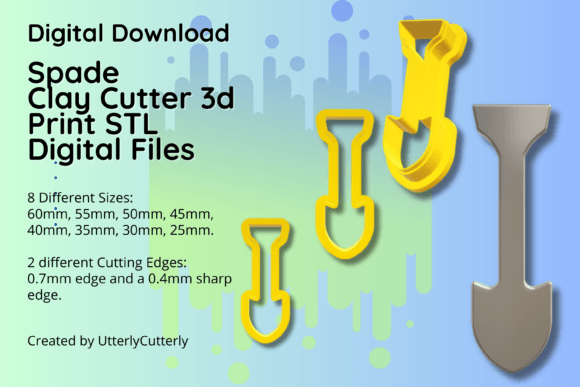
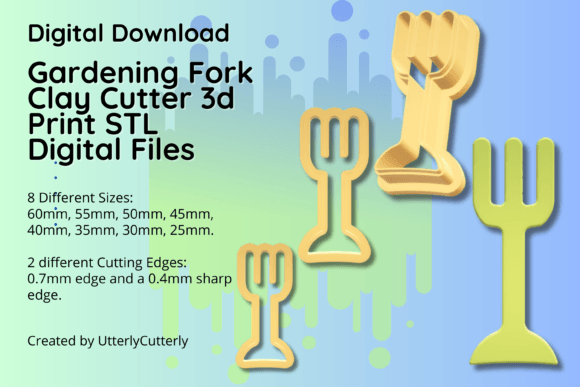
One of the primary advantages of acquiring a high-quality Clay Cutter STL File Gardening Fork is the precision engineered into the digital model. This specific bundle includes eight distinct sizes ranging from 25mm to 60mm. This graduated sizing is crucial for makers who need visual consistency across different projects. A 60mm cutter might be perfect for a statement pendant or a cookie, while the 25mm version is ideal for delicate earring components or charm bracelets. The size measurement refers to the longest ends of the design, ensuring you can plan your material usage and layout with accuracy.
Versatility extends beyond mere dimensions. This pack includes two distinct cutting edge profiles, each serving a unique purpose in the making process. Understanding the difference between these two types allows you to select the best tool for your specific medium:
- Standard Edge (0.7mm Wall): This version features a 0.7mm wall thickness with a 3mm thick base and a total height of 12mm. It is robust and durable, making it excellent for firmer clays or repeated use. The slightly thicker wall provides structural integrity during the cutting motion, reducing the risk of warping if printed in standard PLA.
- Sharp Edge (SE): Abbreviated as SE in the file names, this variant boasts a 1mm support wall but tapers to a razor-thin 0.4mm cutting edge. Like the standard version, it maintains a 3mm base and 12mm height. This profile is designed for clean, effortless cuts through softer materials like fondant, gum paste, or conditioned polymer clay. The sharper edge reduces drag and distortion, preserving fine details in the finished piece.
Both cutter types share a consistent 12mm height, which is an ergonomic sweet spot for most users. This depth provides enough surface area for a comfortable grip while keeping the print time reasonable. Furthermore, any embossing lines included in the design are set at 10.5mm tall. This specific dimension is intentional; it ensures that when working with clay thicker than 1.5mm, the embossing makes full contact without bottoming out prematurely. This attention to dimensional detail highlights why dedicated STL files often outperform modified generic models.
Applications Across Jewelry and Culinary Arts
The beauty of the Clay Cutter STL File Gardening Fork lies in its cross-disciplinary utility. In the realm of jewelry making, this shape acts as a canvas for endless surface design techniques. Because the outline is recognizable yet simple, it supports complex mica shifts, silk screen applications, and textured pastes without looking cluttered. Makers can utilize the larger 50mm or 55mm sizes to create barrettes and hair clips that serve as wearable gardens. The smaller 30mm and 35mm options are perfectly scaled for stud earrings, allowing creators to offer matching sets or graduated collections.
Beyond adornment, these digital files bridge the gap to culinary arts. Food-safe printing practices open up possibilities for bakers and confectioners. The Sharp Edge (SE) variants are particularly valuable here. When rolling out fondant or cookie dough, a sharp, thin edge prevents the material from sticking or tearing. A gardening fork-shaped cookie could be the centerpiece of a harvest festival bake sale or a unique addition to a floral tea party. Because you own the digital file, you can print dedicated food-safe cutters in PETG or other certified safe filaments, keeping them entirely separate from your craft studio tools.
Gift-giving also becomes more personal with custom-made items. A set of gardening fork earrings made from clay colored to match a recipient’s favorite flower pot, or a bespoke cake topper for a master gardener’s birthday, carries a sentiment that store-bought gifts cannot replicate. The ability to curate custom cutter combos using this pack alongside other botanical STL files allows for themed collections that feel cohesive and professionally designed.
Optimizing Your 3D Printing Workflow
To get the most out of your Clay Cutter STL File Gardening Fork, understanding print orientation and settings is essential. These files are designed to be easily printed, but optimal results come from proper setup. Printing the cutters vertically (standing on the base) is generally recommended to avoid layer lines on the cutting edge. However, depending on your printer's bed adhesion and nozzle size, some users prefer printing flat with supports. The 3mm thick base provides excellent stability for vertical printing, minimizing the footprint on the build plate and allowing you to batch print multiple sizes simultaneously.
Material choice significantly impacts the performance of the final tool. While standard PLA is sufficient for occasional use or soft clays, PETG or ABS offers better durability and slight flexibility, which can be beneficial when demolding intricate shapes. For the Sharp Edge variants, ensuring your printer is well-calibrated is paramount. A 0.4mm cutting edge requires precise extrusion; over-extrusion can blunt the edge, while under-extrusion may cause layer separation. Running a flow rate calibration test before printing a full batch of SE cutters can save time and filament.
Maintenance of your printed tools ensures longevity. After use with polymer clay, wiping the cutters with a small amount of rubbing alcohol removes residue and prevents cross-contamination of colors. For food applications, thorough washing and drying are mandatory. Since 3D prints have microscopic layer lines, sealing food-safe cutters with a food-grade epoxy or using them only with non-stick intermediaries like plastic wrap can enhance safety and cleanup. Treating your digital downloads as master templates rather than disposable items elevates the quality of your entire production line.
Expanding Your Digital Tool Library
Acquiring this bundle is an investment in a scalable creative system. The gardening fork design pairs exceptionally well with other botanical elements. Imagine combining the 40mm fork cutter with a matching trowel, watering can, or leaf shape to create a comprehensive garden-themed product line. New STL files are added to the store weekly, encouraging makers to continuously expand their repertoire. This ecosystem approach to digital tools means your equipment grows alongside your skills and business needs.
Digital files also offer the freedom of iteration. If you find that you need a slightly different scale for a specific project, having the source STL allows for minor adjustments in your slicer software. You can scale the Z-height for deeper impressions or adjust the X/Y axes for proportional tweaks, provided the wall thickness remains viable. This level of control is impossible with physical, mass-produced cutters. It empowers makers to solve problems creatively and adapt to client requests instantly.
Ultimately, the Clay Cutter STL File Gardening Fork is more than a shape; it is a facilitator of expression. It removes barriers between imagination and realization, providing professional-grade geometry in an accessible digital format. Whether you are printing your first pair of botanical earrings or fulfilling a large order for a seasonal market, these files provide the reliability and aesthetic appeal necessary for success. Please remember that this is a digital product; no physical item will be shipped. Upon purchase, you receive the data needed to bring these designs to life in your own workspace, granting you total autonomy over your creative output.