Clay Cutter STL File Gardening Watering: Digital Designs for Makers and Bakers
For creators who love the intersection of horticulture and handmade crafts, the Clay Cutter STL File Gardening Watering collection offers a specific solution to a common design challenge. This digital download bundle provides immediate access to high-quality 3D printable files featuring a classic watering can silhouette, serving as a universal symbol for gardening and plant lovers. Rather than waiting for shipping or settling for generic shapes found in big-box craft stores, makers can print these tools at home within hours. The design captures the nostalgic charm of traditional garden care, making it an ideal motif for everything from delicate polymer clay jewelry to edible fondant decorations.
The versatility of this STL file pack lies in its adaptability across different mediums. While primarily marketed toward clay artists, the utility extends far beyond earrings and pendants. Because the files are optimized for clean printing, they serve dual purposes in both the crafting studio and the kitchen. A baker decorating a botanical-themed wedding cake can use the same digital asset as a jeweler creating matching bridal party gifts. This crossover functionality makes the Clay Cutter STL File Gardening Watering set a valuable addition to any digital maker library, bridging the gap between culinary arts and wearable accessories.
Real-World Applications Across Creative Disciplines
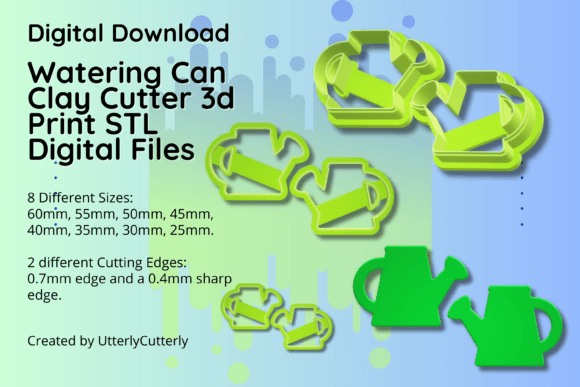
Understanding how these cutters perform in actual projects helps clarify their value over standard cookie cutters. The watering can shape is deceptively complex; it features a spout, handle, and body that require precise wall thicknesses to maintain structural integrity during cutting. In jewelry making, specifically for polymer clay earrings, weight is a primary concern. The included size range allows artisans to scale the design appropriately. A 60mm cutter might be perfect for a statement pendant or a keychain, while the 25mm or 30mm options create lightweight, comfortable studs that won't drag down an earlobe. Having eight distinct sizes means you aren't forced to resize a single vector file manually, which often distorts line weights and ruins the aesthetic balance of the watering can’s spout.
In the culinary space, these cutters excel with rolled fondant, gum paste, and marzipan. When creating garden-themed cupcakes or cake borders, consistency is key. Using the 40mm or 45mm sizes ensures that every watering can decoration matches perfectly, something difficult to achieve with freehand knife work. For cookie decorators, the sharp edge variations allow for crisp outlines on sugar cookies, providing a defined boundary for royal icing flooding. The symbolism of the watering can also resonates deeply for niche markets; these are popular for plant shop grand openings, master gardener certification gifts, or "new home" presents for avid gardeners. Being able to produce custom-branded or themed items in-house adds significant perceived value to these gifts.
Navigating Edge Profiles for Specific Materials
One of the most practical aspects of this digital bundle is the inclusion of two distinct cutting edge profiles. Not all materials behave the same way under pressure, and having specialized tools prevents frustration. The first option features a 0.7mm wall with a 3mm thick base and 12mm height. This sturdier profile is generally preferred for softer clays, play dough, or thicker fondant. The wider wall reduces drag and prevents the cutter from twisting accidentally during use, which is crucial when working with sticky mediums that can distort easily. It provides enough surface area to press down firmly without discomfort.
Conversely, the Sharp Edge (SE) variant is abbreviated in the files for easy identification. With a 1mm support wall tapering to a razor-thin 0.4mm cutting edge, this version is engineered for precision. Polymer clay artists often prefer the SE version for intricate earring components because it slices through conditioned clay with minimal resistance, reducing the need for post-cut cleanup or sanding. However, users should note that the thinner edge requires a gentler touch and may not be suitable for very stiff cold porcelain or dense gingerbread doughs. Choosing the right file before hitting "print" saves filament and time, ensuring the tool matches the material's density.
Embossing Considerations and Clay Thickness
A critical technical detail for users planning to add texture is the embossing line height. If your chosen STL variation includes internal detailing to define the watering can’s segments or spout holes, these lines stand at 10.5mm tall. Given the total cutter height of 12mm, this leaves only 1.5mm of clearance. Practically speaking, this means your clay or dough must be rolled thicker than 1.5mm to capture the full impression without the base plate bottoming out against your work surface. Rolling clay too thin will result in incomplete details or tearing.
This specification highlights the importance of using consistent slab rollers or guide rings when preparing material for these specific cutters. For those making barrettes or hair clips where durability is paramount, rolling slightly thicker (around 2mm to 2.5mm) accommodates the embossing beautifully while providing enough structural mass to withstand daily wear. If you intend to use the cutter solely for outlining without embossing, simply ignore the internal detail layers in your slicer software or select the outline-only file if provided, allowing for thinner applications suitable for delicate appliqué work.
Optimizing Your 3D Print Settings
Since this is a digital product, the final quality depends entirely on your printer settings. These STL files are designed to be easily printed, but "easily" assumes correct orientation and layer management. Printing these cutters vertically (standing up on the base) is typically recommended to avoid supports inside the cutting cavity, which are notoriously difficult to remove and can ruin the smooth finish needed for clean cuts. A brim is often helpful to prevent warping on the 3mm base, especially with PLA or PETG filaments.
Layer height plays a significant role in the smoothness of the curved watering can shape. While 0.2mm is standard for many prints, dropping to 0.12mm or even 0.08mm for the top few millimeters of the cutting edge can drastically improve performance. Smoother layers mean less friction against clay and fewer visible stair-stepping marks on finished pieces. Additionally, because these are functional tools that come into contact with skin and potentially food, post-processing is essential. Sanding the cutting edge lightly with high-grit sandpaper removes any microscopic layer lines that could harbor bacteria or snag delicate fondant. Always verify that your filament choice is appropriate for the intended end-use, keeping in mind that standard 3D printing plastics are not inherently food-safe due to layer gaps.
Curating a Cohesive Botanical Collection
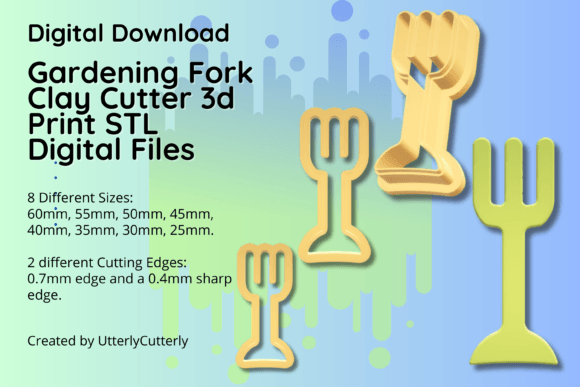
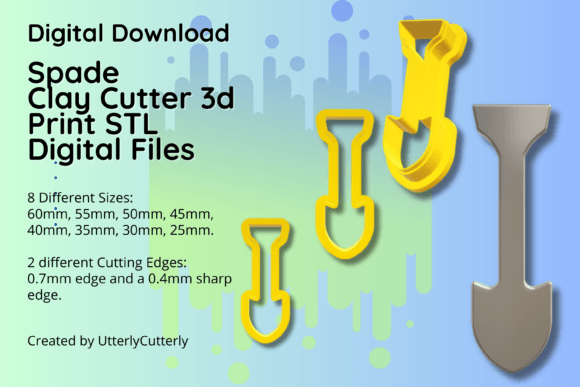
The Clay Cutter STL File Gardening Watering pack is designed to integrate seamlessly with other botanical designs. With new STL files added to the store weekly, makers can build a comprehensive inventory of nature-inspired tools. The standardized sizing system—ranging from 25mm to 60mm in 5mm increments—allows for effortless mixing and matching. Imagine creating a cohesive product line where a 50mm trowel cutter pairs perfectly with a 50mm watering can, or stacking a 30mm flower atop a 45mm watering can to create a multi-layered scene. This modularity encourages experimentation and helps sellers maintain a consistent aesthetic across their shop.
For those running small businesses or Etsy shops, this scalability is a major advantage. You can test market demand by printing just one size initially, then expanding the range based on customer feedback without investing in expensive metal die manufacturing. The ability to curate custom combos means you can offer exclusive sets that competitors relying on mass-produced cutters cannot replicate. Whether you are crafting for personal enjoyment or commercial sale, having immediate, on-demand access to versatile, well-engineered gardening motifs streamlines the creative process and keeps your offerings fresh and relevant to seasonal trends.